Thursday, September 15, 2022

When Advice Is Worse Than None At All

Boulder is a place that attracts a surprising number of fakes. The types of imposters here in Boulder are ones who cling hard to a label and boast about who they are but, in reality and probably without realizing it, show they are the opposite of whatever identity they claim to be. The yoga community is rife with people who like to look down on others, despite the philosophy of the practice in which they engage including teachings related to detachment, self-awareness, and spiritual knowledge, traits that, in theory, lead people to become better versions of themselves, not ones who prompt judgment and hubris. Here, yogis like to flaunt their fancy apparel and the fact that they attended Burning Man more than they focus on any spiritual advancements. 

People who genuinely engage in the practice of yoga, on the other hand, are the opposite. They don't have to flaunt anything or use any kind of signaling, virtue or otherwise, to be admired. Being adored is not their goal. Their activity becomes part of who they are and isn't seen as good or bad. It just is. It's the same as if they didn't engage in the practice, because who they are is more important than what they do, how they dress, or how they look. They don't have to advertise what they do to anyone in order to feel content in the world.

It's easy to forget some simple rules of life -- you don't have to put on an act in order to be appreciated, and contentment isn't found outside yourself -- with the mess that occurs on social media, everyone screaming for attention. One of the best yoga teachers I ever had was overweight according to standard American weight charts, smoked, rode a motorcycle, and played in a rock band. He never wore flashy clothes and didn't have to adhere to any American stereotypes around the discipline; he was just really good at yoga and a top-notch instructor. He's a model for what it means to be authentic.

I view the running community at large the same way I look at the yoga community here in Boulder. Within the sizeable group, there are pockets of individuals who do good, sometimes really good things. They are inspirational and out to become the best version of themselves. These are people who create inclusive communities or foundations, or are skilled at what they do, or are simply kind and thoughtful. Most of these types are athletes or coaches, or people who want to do good in the world and limit their time on social media.

When it comes to running, Addy Bracy and also the Roots Running crew set a great example. Then there are a few who can balance a hearty dose of social media with a life away from the computer. Sage Canaday comes to mind. His social media content is informative, but he has fun with it and doesn't take himself too seriously. In sharp and disappointing contrast are the many self-appointed experts who like to offer bite-sized bits of imagined wisdom without really saying much. The ones who make up this last group are primarily writers, fans of the sport, and influencers. 

Whether it's on social media or in a published article, people in this last group love to pretend the content they are sharing is fresh and new, but it's almost always information that has been presented before, usually without reference. Condensing complex ideas into pithy little sayings is rarely helpful, and using hyperbole to the point of absurdity is equally unnecessary and uninteresting. Stephen King cautions against writing past your ability, yet so few are willing to take his advice. They think using as many adjectives as possible is the way to go, even if the modifiers are used incorrectly or make readers cringe. Don't fake being a virtuoso if you can't play the scales. Instead, work on your technique and try to enjoy the process. That's what I do. 

Many errors could be easily corrected in published material if a qualified editor would step in, but running magazines seem to have a shortage of competent editors, Runner's World being the occasional exception, and anything by Alex Hutchinson being the consistent exception. Really, though, it's not fully the responsibility of the writer to offer up a perfect final piece. It’s unfortunate that anything goes these days. 

Some of the more bizarre life and training takes I have seen online and in publications recently include the following:

1) A coach claimed that rest is different for everyone. He suggested that for some it’s a day off, but for others it’s a 15-mile run. A few of us corrected him on Twitter, saying that 15 miles, even at the most leisurely pace, isn’t even a recovery day since anything that long is going to take a toll on your body. It can be an “easy” day for some but definitely not a rest or recovery day, even if it might seem like a piece of cake to very fit individuals. Rest is rest and means just that. “Active rest” means engaging in low-intensity activity for a limited duration and allowing your body to recover, not breaking it down further. 

2) On Twitter, a well-known athlete announced that there’s no such thing as overtraining, only under-fueling or not getting enough rest. My response to that is: bullshit. Overtraining is doing more than your body can safely manage at any given point. You can eat and sleep well and still do more than you are physically or emotionally able to handle and land in doing too much territory. Sure, in the big picture, most training issues can be resolved by getting adequate nutrition and rest, but we are complex beings. Any kind of maladaptation to stressors can lead to overtraining syndrome, so it's more complicated than a hasty one-liner designed to generate lots of likes on social media can convey.  

3) One of the more shocking declarations I saw was from an account called Anorexia Myths on Twitter, in which the poster suggested that all anorexic thoughts center around food and implied that eating food will fix the problem, which couldn't be further from the truth. This mother of two anorexic children is taking a symptom of the illness and calling it the cause. Eating disorders are complex, and recovery doesn't come down to "eat a sandwich!" This kind of take diminishes individuals who struggle and suggests that eating disorders are a choice when, in fact, they are not. In her attempt to debunk myths around the illness, she's actually perpetuating them. 

4) It's hard to imagine that there were two articles, one in Women's Running and the other in Trail Runner, that focused on strength training by suggesting individuals simply lift heavy shit or do some body-weight exercises now and then. This bright idea was promoted by a coach and writer on Twitter as well. A more interesting and realistic approach would be to discuss muscle activation, strength specificity, and structural strengthening, but that's not as appealing to writers who want to attract the attention of the general masses on social media. It takes too much thought and is too narrowly focused on runners to get into why and how athletes might benefit from an actual lifting or strength program. Just lift shit is easier to convey, isn't it? 

Instead of bad advice in running magazines, here's a link to someone who knows how to assist athletes with individualized strength programs: KPPerformance

5) In the same vein as "just lift shit" is a recent article in Women's Running with the groundbreaking message: Just move a little. Women's Running and other running publications are now in the habit of publishing what looks more and more like blog content than actual articles, which could be interesting if the authors thought a little bit about their target audience and didn't present everything as if either the world is ending or everything is idyllic. Seriously, writers go from You can be all you want to be! to You'll get slow and need to avoid snacks, and that will be dark as hell when you... go through puberty or go through menopause or go through a pandemic or get old, or get injured, etc.

If you're writing for a running as opposed to a fitness magazine, the "Here are a bunch of exercises anyone can do. Fuckit if they relate to running or not" approach isn't best. If a reader searches hard enough, she might find a helpful concept -- that people should exercise for their health, even if they're not going to race -- in these types of overly general articles, but most are lacking so much in depth that the sentiment is nearly lost. People benefit from information that's to the point, not from overly vague concepts. 

If the topic is transitioning from being a competitive runner to being a jogger, discuss the psychological aspects as well as the reasons why some might need or simply choose to make the switch and how the change can affect a runner. Claiming something is depressing without explaining why or getting into how to address it isn't helpful. 

Those of us who have raced, even if it's not at an elite level, are likely to have difficulty with identity as shifts in training volume and intensity occur, forced or not. Imagine how I have felt the last year or so not being able to walk at times, but even I have adapted. Kara Goucher, in a brief update in February this year, brought up the difficulty of being faced with a life-altering condition as a runner who identifies as such. Her short post resonates with more readers than many so-called articles because she allows herself to be vulnerable and lets people know that she's embracing the unknown in her situation. She takes each day as it comes, acknowledges her fears, and does what her body and mind will allow. 

Even though we are creatures that no longer hunt and, as adults, rarely play, our bodies and souls still crave movement and a challenge. As a species, we do better if we are active, but when we can no longer hit high mileage or intensity goals, there are ways to satisfy the inner longing to engage in exercise, even if it's no longer all that vigorous. 

There is a way to transition to cross training or jogging or walking, whatever activity your body can manage, and create beneficial physical and psychological challenges while still being gentle with ourselves in order to reduce the risk of injury. If life pulls you in a different direction, it doesn't mean you have to say, "fuck it!" and let go completely. And if you do, there's nothing really wrong with that, either, as long as you're making some effort to maintain health, however you and your doctor define that. Sometimes a complete break is not just fine but necessary. Exercise is something you can always return to.

A terrible message and one that's likely to scare individuals into not trying at all is that starting an exercise program is difficult and unpleasant. I see this over and over again. On some level, this may be true that starting or starting over may be difficult. Any change can be hard, but a new beginning is also exciting and rewarding, especially after a forced break. Yes, fatigue might hit you hard initially, but you can measure progress fairly quickly. 

Besides, training doesn't have to be done in extremes. Life doesn't come down to either working toward race goals or sitting on the couch. There are plenty of options between the two. 

Even without structured training, you can still run or bike time trials, jump in fun runs, race for charity, do relay-type races with teammates, race for the sheer pleasure of it, or map out an adventure run for the heck of it. There's no rule that says you can't hire a coach, either. It's fine to receive guidance even if you have no racing goals. 

What's very much lacking in the articles I see in most running magazines around change and reduced activity, especially in older athletes, is the mental and emotional aspect of running and how deeply former athletes are affected by not being able to engage in the sport they love. 

In an interview I did with Suzy Favor, we discussed depression and how not running at a high level after spending years training hard can affect a runner's mental health. Simply saying "my identity was once a runner and now I jog" doesn't go into how to most effectively manage any upheaval that can occur when transitioning or being forced into a less athletic role. 

Not one running-related article of this type mentioned processing strong emotions that might come up and even grieving the loss of your former self. For some of us, losing the ability to race or train hard is like losing a best friend, and every time we go out and can't reach our potential, the sadness is there, lingering in the background. It's not easy and can take a long time and a lot of work to accept where you are and stop looking back. I still struggle with it. For Suzy, therapy was helpful. 

6) The last topic I'll cover is that of a coach and writer who basically suggested to his audience that a good approach to training is to do what a great athlete (who's probably doping and has a team working with him) does. If he doesn't lift weights, drop the barbell! This is some of the worst advice anyone can give. 

Copying a professional athlete is an approach that's not individualized, and how someone else achieves success might not work for you. For example, if you're an athlete with some muscle imbalances, lifting might help prevent injury while avoiding strength work because someone said a certain pro skips it could increase the chances of getting hurt. Lifting can help increase overall strength including supporting muscles, which also helps prevent injury. "You do you," not "You do someone else" (you know what I mean) is the best advice here. 

I'm really glad to see that Sage Canaday started a coaching program. I think he will offer athletes some great advice based on his experience, knowledge, and his ability to have fun. Also, he seems to have assembled a great team to assist him. 

I don't have an editor, so I'm sure this doesn't read as a brilliant article. Still, I hope it inspires some thought or offers some guidance to readers. 

Thursday, July 28, 2022

Fuck Your Plate of Pasta

There's no question that I have tremendous empathy for anyone who has struggled with an eating disorder. Knowing what it's like, I wish anyone who has starved, binged, purged, hated themselves, or self-harmed well. These are terrible illnesses to manage and my heart aches for anyone in the throes of any illness. 

My empathy for anyone having a hard time, however, doesn’t negate the anger I feel when I see individuals, some who probably mean well and others who are clearly opportunists -- those who prefer being seen over doing what’s right -- post misleading information or outright misinformation about either these kinds of disorders or their recovery. 

Unfortunately, with the Internet, anyone can dump a heap of words into an article or blog post, proudly waving the newest word salad shooter, and act like he or she is some kind of expert in a given field. 

I see this all too often when it comes to eating disorder recovery. What a shame that with a recent movement encouraging others to share their story, whatever it might be, there wasn't also a disclaimer insisting that people be both honest and considerate. As a result of a world that's more focused on appearance and less and less on skill and good intentions than ever before, we're stuck with individuals cramming their falsehoods in our faces under the guise of a bona fide university lecture. 

People who desperately crave attention don’t think about how their words might affect others. Their main concern is increased notoriety. They want to be pointed at and adored, and many will take a few crooked steps to achieve this. 

With everyone being able to declare themselves anything they want these days, even editors who are hired for publications when, for example, they don't know the difference between who and whom, incorrectly use it's instead of its, have never properly used a semicolon in their lives, and don't think there's a difference between every day and everyday, it's easy to understand why misconceptions about illnesses so quickly and easily spread. It's alarming what some running journalists and their editors present, especially when it comes to content related to eating disorders. 

In a 2007 article, for example, one author of a piece on female athletes and eating disorders mentioned triggering numbers, incompletely or wrongly defined anorexia and bulimia, and suggested coaches should identify eating disorders in athletes by looking at the runners' bodies, which wouldn't really help detect any other disorder except possibly severe anorexia. 

Remember, how someone looks and even what someone weighs doesn't tell a complete story. According to ANAD, less than 6 percent of people with eating disorders -- about one in seventeen -- are medically diagnosed as underweight. Then again, this is a writer who made a fat-kid reference in a failed joke attempt on social media, so her understanding of these illnesses and her compassion for anyone struggling appear to be lacking. And, despite more authors avoiding potentially triggering numbers these days, information on eating disorders presented in running and other magazines is still quite often inadequate at best and potentially harmful at worst. 

Disclaimer: I make mistakes, a lot of them. Long before it was established that numbers can be triggering, I wrote my first book and used them, but I have never published content online without a warning if I feel anyone might be triggered. I’m also not an editor and don’t consider myself a great writer. I have dyslexia, which is why I would never consider taking a job as an editor and also why I tend to blog more than actually write material to submit to publications. 

My content is truthful, though, and my goal has always been to help others find a way through the darkness of an eating disorder. But more recently, my goal has shifted to include pointing out frauds and those who, intentionally or not, give people the wrong idea about what it’s like to suffer from a potentially deadly disorder. 

It's one thing to lie to yourself. But when you lie to the public, you risk harming specific individuals in a venerable community. 

Mark Twain was correct when he said that a lie can travel around the world and back again while the truth is lacing up its boots. Twitter and social media in general speed up this process even more so. Just the other day, a political pundit reposted a statement about Trump that was obviously false, though with news relating to Trump it's often hard to tell. Still, this was far-fetched enough to cause any normal, rational person to say, "Hang on, there, Billy," and look to Google for some clarification. Instead of this person's followers questioning it, though, they all started retweeting it and commenting on it as if it were true. 

That episode and countless like it demonstrate why someone with a very large platform presenting herself as an expert in dealing with eating disorders despite having no credentials can end up doing a lot of people a disservice, and can even cause harm by giving out misinformation: That misinformation spreads so quickly and within a community in desperate need of true information and rational, compassionate guidance.

While I'm not surprised that misinformation spreads, I find it strange, given the availability of information on the topic, how many individuals still insist that there's no big difference between disordered eating and an actual eating disorder. I just read another article in which the author brushed over the difference and lumped the two together, no-big-deal style. There is a difference, and it's important to know that because there are different approaches for dealing with each. And once a person crosses into eating-disorder territory, it can be extremely dangerous and could require more immediate and intensive care. 

Disordered eating is playing with fire, but having a full-blown eating disorder is like walking into the flames. Both should be addressed and taken seriously.

I've mentioned before that when Lauren Fleshman and others like her imply that eating disorders are illnesses that mentally tough people can more easily avoid, they give people the wrong idea about these kinds of disorders and recovery. 

Imagine being in the throes of such a dark and overwhelming illness and seeing someone with a large platform suggest that people who struggle lack mental toughness. But errors in judgment when it comes to content can be more subtle than someone confidentially and incorrectly suggesting she's mentally tougher than those of us who have struggled. 

There's no doubt that having an eating disorder makes life more difficult and decreases your chances of truly excelling in a given area. A chef who doesn't taste his food for fear of weight gain won't be as successful as one who can adjust flavoring in the moment, just as athletes who are improperly nourished will likely suffer injuries, possible muscle weakness, and might also experience emotional burnout more quickly than someone who's well nourished. But nowhere in any of this are signs of a lack of mental toughness. It's important to distinguish between the harmful effects or side effects of these illnesses and grit or fortitude, which isn't usually lacking in those who struggle, especially distance runners. 

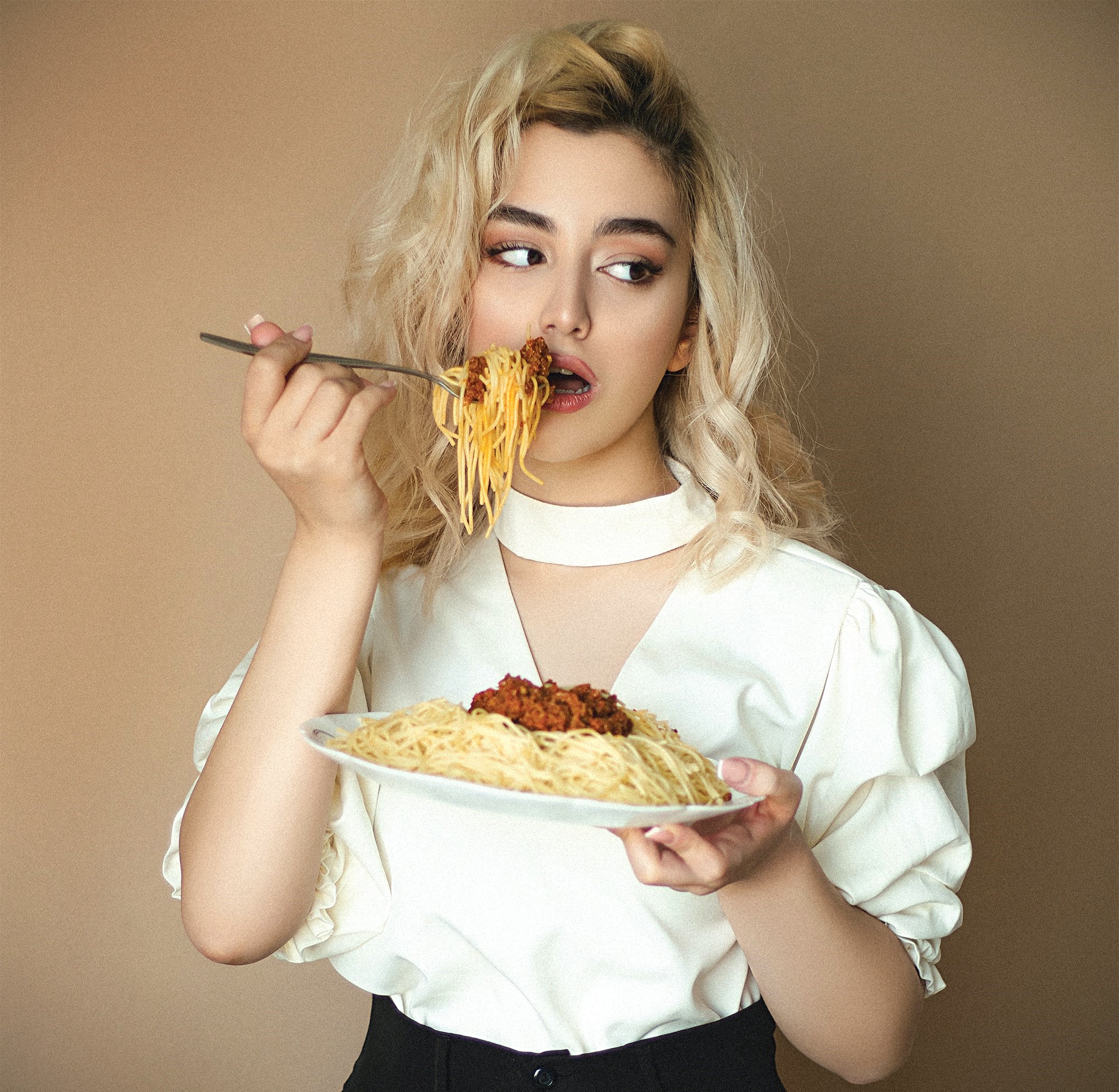
It's actually not uncommon to see dishonesty, even in recovery circles. When you think about it, it's not all that surprising since those with eating disorders become skilled at lying and manipulating, just like any other addict, in order to keep engaging in the behaviors that feed their obsessions and compulsions. Much of the time, subtle fibbing online comes from people who let slide with their words that they are still unwell, but post images of themselves sitting in front of a plate of pasta pretending to eat mounds of those high-carb ribbons. It can also come from writers who publish articles in which they push the idea that they eat loads and loads of junk food, just massive amounts of it while sitting on the couch, and isn't that hilarious and cute? 

It gets old seeing that shit, and it's not nearly as funny as the images of women laughing alone with salad but equally unrealistic to think that an image of some food suggests complete recovery or happiness. 

What and the amount of food people eat is all relative. I used to call what looks like a snack to me now a huge meal when I was sick, and sometimes I would exaggerate descriptions of my portions when I wanted to get concerned relatives off my back. 

Strangers on the Internet don't need to know what or how much you eat. There's such disregard for people struggling by individuals who claim to want to be part of the recovery solution, but nobody needs to see your "what I eat in a day" video or read about how many bags of potato chips you eat while sitting on the couch. It’s just not helpful, and, as I've mentioned before, I’m excluding people who share fun recipes or post nice images of a meal they fixed. That's innocent enough and not what bothers me. I’m talking about people who are trying to push a narrative, either to fool themselves or the public or both. 

Nobody promoting recovery needs to imply that getting well means eating nothing but junk or massive amounts of a given food. True recovery is about so much more than what you eat. It’s about honoring your body, having compassion for yourself and the struggles you have endured, feeling emotions, healing past trauma, being more flexible, and engaging more fully in the world. It's about living, not simply eating something because training hard gives you that right.

That's another problem with people who may mean well but entirely miss the mark: Too often, food is presented as fuel but with the implication that it's really the reward, a treat for expending energy instead of a necessity, sustenance for living, not to mention a way to connect, to enjoy life, and to honor family or cultural traditions. 

Nearly every athlete-turned-writer I have seen publish a piece on eating disorders, whether they realize it or not, suggests that you can eat "fun" food if you exercise hard enough. What they don't get into is that you need food whether or not you are training. You need it if you're injured to help your body heal. You need it in order to function as a human being. 

I often wonder if people who write in a way that suggests food is to be enjoyed more if you're an athlete realize how much they advertise their own insecurities. At least be honest. 

With so much deceit in the world, even in the running world  -- dopers, cheaters, frauds, grifters, and liars -- trust in society in general is waning. Lying isn't just bad for those witnessing it, though; it's detrimental to the one pushing flase stories. Though the brain of a liar changes and ultimately makes spewing falsities easier, not being truthful ultimately has consequences. When I was in the hospital being treated for my eating disorder, a nurse who was in recovery for bulimia told me the key to recovery is being honest with yourself and others. She was right. lies hurt others, but lying to yourself also causes harm.

This isn't to say that those struggling, me included in all the ways I do, can't be of service to others. My attempt in this post is to point out how unhelpful it is to yourself and others when you're not honest. Self-acceptance doesn't come if you present a false version of yourself to the world, and recovery doesn't come if you take a stance with friends, relatives, and therapists that basically states, "This is who I am, fuck your advice and observations about my behavior!" If that's your plan in life, fine, but don't share it as advice and pretend this is a useful path for others to follow. 

Sharing stories can be a really great way to help remove the shame around eating disorders, but not if those doing the sharing are misrepresenting what they are doing and where they are in their process and, in the same breath, dictating how other people "should" manage. 

This is not helpful. At all. Recovery is a process, but, as an author, if you "yada yada yada" over the important parts, like whether or not you're truly recovered, the deeper issues that contributed to developing your illness, what helped you recover, and how you maintain recovery through life's ups and downs, you're not contributing very much to recovery conversations. 

If your main goal is simply to say you struggled, don't hide the details of where you are in your process behind a plate of never-to-be-eaten pasta. When you let people in and are authentic, that's when true healing can begin. I may have a ways to go, but I'm not hiding where I am behind images of food or suggesting I'm further along than I am by posting a plate of noodles that proves everything's just fucking fine. 

Photo by mahdi chaghari


Wednesday, July 20, 2022

Blocked by Association

In his book, "Medium Raw," Anthony Bourdain first calls Alan Richman a douchebag before correcting himself and opting for a more appropriate description: cunt. The insult was preceded by a long explanation of why the guy deserved the title, but just as flawlessly, Bourdain wrote paragraphs praising those who deserved it. The phenomenon of vilifying those who react to misdeeds instead of those who commit them is nothing new, so it wasn't surprising that some readers bristled at Bourdain's use of the C-word and unjustly turned their anger not on the food critic who ripped on the New Orleans restaurant scene shortly after Kartina but on the guy with the flowery vocabulary.

This kind of reaction occurs quite a lot in politics and online, where everyone is looking for any reason at all to become irate and quickly blame the messenger instead of those engaging in questionable behavior. Surprisingly, though, it happens in the athletic community as well. Ross Tucker addressed extreme thinking and an "us vs them" mentality in the most recent episode of The Real Science of Sport. When it comes to transgender athletes in sport, those on the extreme left immediately paint anyone who considers it unfair for trans women to compete against women as someone on the extreme right, which is rarely the case. It's a terrible take for anyone to define a person by only one issue and to assume that, based on that one issue, a person automatically thinks a certain way across the board, that this person who wants fairness in competition is transphobic, a Nazi, or associated with extremism. 

More people are starting to realize that, despite the issue being complex when it comes to emotions, inclusion versus fairness in women's sport is pretty straightforward when it comes down to the science, and with increasing evidence that transgender women retain an unfair advantage even with hormone suppression, over 50% of Americans are against allowing trans women who have gone through puberty as their biological sex to compete against women and girls. Yet anyone who holds this majority opinion is often called names, threatened, vilified, or blocked for having an opposing opinion. You're seen as the enemy if you think differently on this or any other issue. It's no different from extreme religious cults. You can be on the same page as far as human rights, education, taxes, climate, and abortion, but if you want fairness in sport or truth in reporting, holy hell you are the goddamn fucking devil. 

Recently, I was blocked without warning by another individual because of my association with Kevin Beck. I may not like the fact that Anthony Bourdain called someone a cunt (I hate that word) even though the guy deserved it, and I may not like some of the adjectives Beck uses to describe certain individuals. I also don't agree with him 100 percent of the time, but I often repost his material because he is a phenomenal writer, is almost always correct, sticks to the truth as much as humanly possible (except for the obvious stretches meant to be humorous), isn't afraid to defend his position, and is one of the few writers who consistently puts out great running content, far better and more accurate than that of most paid journalists. But because he's not on social media for anyone to block, I'm the next best thing. Forget the shitty content, lies, and misinformation others publish and post, shoot the messenger of the messenger. 

What's bizarre to me about all of this is the fact that other people who repost the same content are not blocked. There's something about me in particular that apparently scares people like Chris Chavez, Erin Strout, David Roche, and whoever runs the Citius Magazine Twitter page. I'm trying to figure out why simply not looking at my Tweets and retweets, mostly of Smol Paul and rescue cats, wouldn't be a better solution since I haven't ever really interacted with any of these people and have never called anyone names. That's not my style. From a business standpoint, why would anyone associated with Trail Runner, Women's Running, or Citius Magazine block someone who has a long history in the sport, has co-authored a book about running, and has run at an elite level? True, I'm no longer a runner, but I occasionally keep up with the sport and write about it. And I'm not that scary. 

After a recurrence of an issue I've been having and a short trip to the ER, I spent two weeks not being able to walk and another one gradually moving one foot in front of the other. As much as I wish I could get into watching track meets or keep up with other races, running events never pull me in like they used to, unless I suspend disbelief, which I have mentioned before. Every time I see someone fall and feel bad or see someone win and feel excited, I remind myself how unlikely it is that those at the top are clean and feel depressed that I ever put so much effort, to the point of being a gimp now, into a sport that attracts so many liars, cheats, and ass-kissers. I'm starting to sound like Beck, but how can anyone who follows the sport at all not? How can people just accept the obvious misbehavior of so many individuals, even if they try hard or are nice? Running journalists act like they're in a popularity contest, not there to report. The exceptions are Sarah Lorge Butler and a few others, mostly old-timers, who tend to stick to actual reporting, not biased coverage. 

I find myself having a harder time wanting to be in this world a lot of the time. Between the pain I've had to endure to the shitty way people are to deep self-hatred, there's not a lot to look forward to. Sometimes I think I'll continue working on my novel, and then I look at it and think how bad it is. It might be better than some really terrible published shit, but I can't seem to push past the self-doubt and my critical mind. I'm lost with where to go with it. No wonder people like Bourdain eventually end things on their own terms. The world and the people in it can be nice, but this planet can also be such a difficult place to exist. Too bad I'm too much of a coward to act on any of my dark thoughts. At least there's chocolate, I guess. 

It's funny that I wrote the first paragraph of this post and struggled to get through it. Then it suddenly disappeared, one of those glitches that leaves a writer stunned and horrified, all those carefully placed words sucked into some kind of Internet void. I had a tantrum and immediately thought it was a sign I should give up writing. After some deep breaths, though, I started putting the ideas back down and recreated what I had lost, probably not exactly in the same order. I'm not sure why I share this, but maybe it's not quite time to give up on everything completely. 


Thursday, June 30, 2022

While The Sky Falls

It feels strange to write after such a long period of mental paralysis, writer's block that extended past assembling words into coherent sentences and bled into everything but basic mechanical daily activities, work, a little exercise, eating, shitting when not stopped up by Percocet, too many hours of streaming services distractions, and some reading here and there. In other words, I have not been productive outside of work, at all. I'm even behind on listening to podcasts because that somehow takes more effort than watching Netflix. 

After back-to-back surgeries (#13 & #14 total for both feet) on my left foot and after almost a year of not really running and several months of no jogging at all, I'm moving a little bit outdoors again, sort of. I can't bring myself to call whatever I'm doing running or even jogging because it's so lopsided, but I'm wobbling along the streets at an average of about 12-minute miles. That's as terrible as it sounds, but it's also on hilly courses. Still, even moving downhill doesn't make that pace much faster, and I'm limited to about 10-20 minutes before my body feels like it's breaking. I suppose that's better than nothing, but it's not great. I'm not sure whether to laugh or cry, but one thing is very clear; I am no longer a runner. I'm glad I had a moment in the sun, so to speak. At least I can look back and admire the runner I used to be, even if I wasn't the perfect example of health at the time. It's not like I am now, either. 

It also feels weird to be writing when there's so much going on in the world, mostly not-so-great and even catastrophic events both in the United States and around the world. It seems a little selfish to focus on me or, more specifically, my foot, but writing often allows me to process my feelings, and the need to do so hasn't stopped because of world events. Hopefully, my words can have some kind of positive impact on at least someone or encourage some deeper thoughts in general.

Sometimes I read what's published, either a novel or an article in a running magazine, and I remind myself that I have got to work on being kinder to myself. That should be a lesson for everyone no matter what, unless you're a serial killer, but I'm so quick to criticize every little thing about myself and the things I do. It's like living with a dictator and someone slightly more rational and optimistic in my brain, a constant argument in my head over how terrible I am versus how it's really not that bad. That's where the OCD comes in, I think. If I complete these arbitrary tasks, no matter how sloppily or unnecessary, everything won't be as awful and my mind can finally relax a little, for a short time anyway. 

My mental health aside, what I've noticed recently is that there is a growing number of individuals who are biased in the medical field, either against women or those who have or have had eating disorders or both. I understand that individual bias isn't the same as systemic bias, but both are a problem. The issues I have faced in the last year started when I went to several practitioners because of continued foot pain and sciatic problems that developed, probably because of all the limping. An MRI showed some of what was going on but not everything. After surgery #13, I was still feeling discomfort, so my doctor suggested another surgery to remove more of a particular nerve he felt was the culprit. Unfortunately, it was a long wait before he could perform the operation, so I got a second opinion (the second surgeon agreed with the first that surgery was my best option), saw a PT or two, and got some acupuncture as well. 

Out of the six or so professionals I saw, the two surgeons agreed it was a physical issue, but two, a PT and a PA, insisted I was "creating pain" or it was somehow psychosomatic. I walked out on one PT before treatment and after he insisted I was creating my pain. I had to ask, if he believed this, then why he wouldn't go into psychology instead of continuing in his field? I was there to get treatment on my physical body, not get my head shrunk. This seems to be more common in Boulder and elsewhere where individuals like to think everything comes down to mind over matter. Well, as powerful as the mind can be, and just like prayer doesn't appear to do anything to prevent mass shootings, sometimes there are physical issues that can't be overcome by simply thinking them away. 

I almost cheered when my doctor, after the last surgery, showed me the huge neuroma he found and cut out. The stabbing sensation wasn't in my head after all, and yeah, I get that when we hurt, it's usually because our nerves send signals to our brains to tell us something is amiss. I also understand that there's an emotional component to pain. That doesn't give anyone the right to discount what a patient is experiencing. 

The other issue I have faced is one that is more widespread, especially for those who are overweight or in the throes of mental illness, and women tend to be more discounted than men. Our pain is more often misdiagnosed, and we are less likely to receive proper medical care overall. It always surprises me when this kind of bias comes from a female doctor, though. I've mentioned how, years ago, one female doctor told me that my medical problem was hormonal when, in fact, I was suffering from viral meningitis and nearly died because she blew me off. More recently, I had an encounter with a doctor who was completely condescending and arrogant and took one look at my medical history and determined that my current issue (sciatica due to limping so badly for over a year) is a bone issue that was caused by my anorexia...40 years ago. Without any evidence that this is bone-related, none, she has insisted that my bones are weak and has treated me like shit. I finally asked that my care be transferred to someone else. 

The thing is, when you're already suffering, it makes it even more difficult to stand up and be an advocate for yourself. Encounters with flippant doctors make it easier to think about giving in to the demons that plague the heads of so many of us who are hurting these days. I basically told the doctor mentioned above that I was cutting off the conversation, and while I'm glad I was able to take care of myself at that moment, I'm not happy I didn't go one step further and really let her know how obnoxious and mean she was being for the second time. I'm not sure if the situation warranted a "fuck you," but I should have at least made it more clear why I was hanging up the phone and transferring my care. I'm not sure my follow-up email was enough to drive home the point of just how awful she was being. 

In other news, David Roche, someone I've never met and never interacted with, ever, joined Erin Strout Citius Magazine, and Chris Chavez in blocking me on social media. Kudos to Women's Running and Fast Women for not blocking me for the awful sin of retweeting some blog posts by Kevin Beck, just like Eric Schranz of Ultrarunner Podcast has done countless times before. It's important to be inclusive unless you don't like someone. In that case, make sure you practice exclusion and cut off any means of communication. That seems like the best approach for "professional" journalists, no? But everyone has to live with their actions, good, bad, and mean-spirited as well. Somehow, these days you're seen as more of a villain for pointing out bad behavior than you are for committing the bad behavior (lying, stirring the pot, hypocrisy, mocking fat kids, etc.) 

I’m keeping this short, not because I don’t have more to say but because with depression comes a lot of brain fog, and I’ve already pushed through a massive amount of murky gunk just to get this far.

Sunday, April 3, 2022

More on Ignoring The Gray

International Transgender Day of Visibility was March 31st this year. This day, also referred to as Trans Day of Visibility is dedicated to celebrating and acknowledging trans people around the world and is separate from Transgender Day of Remembrance, an event that "seeks to highlight the losses we face due to anti-transgender bigotry and violence." In response to the March 31st celebration, Women's Running published an article of sorts by Erin Strout in which she claims white men emailed her (I'm not sure how she would know unless she actually knows the men who wrote or they announced it in their emails, which seems highly unlikely) and requested she address "men competing against women" meaning transgender women competing in the women's category, a topic she admits she largely ignores, whether questions posed to her on the subject are worded in a less objectionable way or not. 

It seems to upset people like Strout and Lindsay Crouse when men, especially white men, claim to show an interest in protecting women's sports. What they should realize is that individuals speak up about it because they care about the topic. They care about their wives, daughters, sisters, and friends, and they care about fairness. Who is anyone else to decide what's important to others? Condemning others for showing an interest in a topic is a tactic extremists use to steer the conversation away from that very issue. Call opponents insulting names, belittle them, block them, or ignore them, and then make the "us vs them" lines really clear to everyone who's in your little corner. Create a bubble of like-minded individuals and boast about how you're willing to talk about the issues when, in fact, you're so afraid of or so against hearing an opposing view that you shut people out before a discussion can even begin. 

For someone who should be interested in the topic of safety and fairness in women's sports considering her position as a journalist, Strout only rarely contributes to the conversation, and when she does, it's on an emotional level, not a scientific or intellectual one. In presenting the obvious fact that people are people, she demonstrates that she's simply not interested in the data unless it's skewed in favor of her view. That doesn't make for impartial reporting. In this case, her article that's featured specifically in a women's running journal should be focused on some aspect of women's sport without discounting biological females. It shouldn't simply show with whom the reporter is friendly in the LGBTQ community or feature only one side of the debate. "I know people who are....!" doesn't make for a solid argument. The truth is that you can be an advocate for transgender individuals and not deny science while looking for a suitable solution to what's fair in sports participation.

Rather than use anyone I know as a pawn, I'm simply going to address the one-sided, biased article that Women's Running published. While it's great to acknowledge Transgender Day of Visibility, a journalist writing for women's sports who turns a blind eye to female athletes who have come forward including Sonia O'SullivanMara YamauchiEmily Diamond, and Ellie Baker, and subtly or sometimes blatantly suggests that anyone who expresses concern about transgender women competing in women's sports is transphobic or a troll isn't doing thorough research and should pull back on her extremely biased takes. This approach is destructive and divisive, and it's not surprising that Strout blocks people like me or shuts down the conversation with people on social media who disagree with her. It's easier for most people to slap others with a label or call them names than it is to engage in meaningful dialogue.  

The term transphobic gets hurled around a lot and often lands on people who are simply pointing out facts or expressing concern. It's a lazy and hurtful insult, a simple way for someone to exit the scene without offering anything of value. There's so much vitriol, often from both sides, that it makes having meaningful conversations nearly impossible, but I really believe there can be a solution when it comes to addressing both inclusion and fairness in sports. Already some running races like the Philadelphia Distance Run are increasing categories to include men, women, and open or non-binary divisions. This is a start at least.

Solutions aren't often journalists' forte, though, especially when it comes to those covering running. It's admirable that Strout feels compelled to publicly show compassion for anyone potentially facing discrimination or hardship. I hope more people do so as well, especially in real life, but right at the start of her article, Strout links to a Human Rights Campaign page that incorrectly states that bills being presented around the country could end up preventing trans student-athletes from playing sports. This is a lie. The reality is that nobody is trying to ban transgender athletes from playing or competing in sports. The main issue is how to allow them to compete in whatever category is eventually deemed appropriate, fair, and safe for everyone. At the moment, though, anyone can compete in their biological sex category, and this won't change. Unlike some who think trans women should never even play women's sports, I think rules around trans athletes should focus more on competition, but, again, nobody is trying to ban participation altogether. 

Divisions and categories in sports competitions are there for a reason. There are sex, weight, class, and age categories. Ross Tucker notes that "women’s sport exists to exclude people who do not experience androgenization during puberty and development.” I'll add that this kind of exclusion is fair, otherwise, why have categories at all? Inclusion of one group shouldn't mean unfairness to any other group of athletes. You would never want to see someone from the heavyweight category compete against someone much smaller in boxing, for example. Is it possible that a lightweight could win against someone in a different category? Possibly, but it wouldn't be a fair fight. It's a point that some people are resistant to acknowledge, that having an advantage doesn't always mean winning. Regarding sex categories, any displacement of a cis woman with a selection of a transgender woman in her place in a limited space is unfair. Some of us are trying to defend women's spaces while others like Strout promote inclusion over fairness but refuse to admit it. 

Strout states:

"The thing is, we can talk about the fairness, the policies, and the still-developing research when it comes to inclusion of transgender women in elite sports, but in the process, it’s unnecessary to misgender people or show them an utter lack of dignity. I won’t allow it in any space that I occupy—nobody should. And we can stand up for kids who can’t stand up for themselves by learning more, voting, advocating on their behalf, and showing them that there are adults out there who care about their wellbeing. It doesn’t take much to show a child what love looks like in the face of so much hate, just as it doesn’t take much to approach complicated issues with curiosity instead of confrontation."

It must be tiring being everyone's moral superior, but, as a journalist, you need to at least attempt to understand the other side. I will do my best to call people by their preferred pronouns, but, even if it makes me uncomfortable and I don't agree, I accept that other people won't, not because they are transphobic, necessarily, but because they are determined to keep women's sports from becoming an open category and don't want changed language to cause confusion or interfere with that. By the way, slinging insults and calling people transphobic and blocking them without knowing who they are or what they stand for is also unkind. I'm going to keep saying that. 

Back to the issue, either Strout and others like her don't know about the research that shows there is a definite hangover benefit from having been born male or they are intentionally ignoring it. There are thirteen different studies supporting the fact that trans women retain a biological advantage, and if you're going to challenge the science that addresses this, do so. Don't just claim that research is ongoing without specifically addressing what about the published studies would lead anyone to believe it's not accurate. 
 
As far as Strout's take on depression in trans individuals, the statistics she presents are similar to those for anorexia. Both communities are at higher risk for suicide and suicide ideation and at similar percentages. This is troubling, but we can't draw specific conclusions based on general statistics around mood. What she presented doesn't reveal if this is a baseline feeling as is often the case with other conditions or if it's unique to certain situations transgender individuals face. She's also relying on additional statistics that are universal, not unique to transgender individuals. For example, most people benefit academically when they are allowed to exercise or participate in sports. It's the same with violence, which has increased overall. In fact, the murder rate in the United States increased by 30 percent in 2020. Statistics taken out of context don't really illustrate much.

Avoiding exchanges relevant to women's running and focusing on more trivial aspects of running actually takes attention away from the sport rather than contributes to it. It's difficult to understand why the same writers who demand we avoid all "body talk" encourage audiences to look at the sexual preferences of athletes and influencers, their overall appearance, and what they like to eat. It's a distraction from what these athletes are doing in their training and their performances and any deeper messages they're trying to share. There's a way to successfully cover lifestyle, advocacy, and running, but too often the running itself or important messages get dropped in the process. The perfect example presented itself on Instagram recently where Latoya Snell addressed issues around feeling safe, and one commenter ignored the post entirely and said, "You look fucking amazing!" which is a compliment, but discounts the content of the post. It's a shame because there is so much incredible women's content that actually relates to sport in a more substantial way, but our attention is drawn elsewhere. 

I actually believe that most rational people want to see transgender individuals treated fairly and with respect, and as hostile as any dialogue around inclusion can be, I believe we are gradually moving toward workable solutions in sports. I just don't think that we will get there if we remove cis women from the conversation.


Tuesday, March 22, 2022

We've Gone Too Far

Since I've already addressed the issue of body talk in a previous post, I'll try not to repeat myself too much, but it seems that writers and fans of sports have gone too far with madly condemning individuals who mean no harm. Yes, it would be nice if everyone would shut the fuck up about appearance, but to suggest comments about body composition are primarily mean-spirited or harmful or directed only at women is incorrect. Humans are mostly visual and social creatures. Those who can't see use other senses to create a mental picture of the world around them. No matter who you are, you have a way to take in your surroundings that includes perceiving others. It’s part of our nature to be aware of appearance on some level, and it's a basic understanding that how someone looks to another person is subjective. 

When it comes to the media, male athletes have been under the microscope for years, and talk about how they look continues today. In many cases, how journalists and sportscasters describe male athletes is borderline abusive. Ever hear of a guy named "big" Andy "the Viking" Fordham? How about William "the refrigerator" Perry, Tyrone “Muggsy” Curtis Bogues, Iain Dowie, Roy "Shrimp" Worters, Charles "the Round Mound of Rebound" Barkley, or Nikolai Valuev, the "Russian Giant"? Even though few people in the media were kind to these individuals when it came to describing their appearance, comments about the size and looks of men rarely cause a stir, and the list of derogatory nicknames for them is endless. 

Back in the 80s, the commentary on American figure skater Brian Boitano seemed to focus on how much taller he was than the other skaters, especially in comparison to Scott Hamilton, whom they referred to as "especially small" or "short," yet nobody complained about it then or now. The occasional comment about size was never the main focus; the athlete's phenomenal skating was. Negative and neutral comments occur so often when describing male athletes that we don't really pay attention, even when talk of American male distance runners turns to how much bigger they are compared to the "bird-like" runners in some African countries. Nobody said shit when someone at Podium Runner referred to Galen Rupp as "The reed-thin, clean cut [sic], baby-faced Rupp" or when Runner's World talked about how thin and pale the guy is, but if anyone comments on the appearance of a female athlete, holy hell, someone's head must roll. 

Recently, in an article in Outside Online, Christine Yu complained about a New York Times newsletter that landed in her inbox in which Mathew Futterman, a journalist previously called out after writing about female athletes, committed the heinous crime of suggesting an Olympic athlete looked like "a sprite." Often, these types of articles, tweets, or public comments condemning others who dare discuss body composition or size of female athletes end up being the spark in deciding whom the self-righteous should bully or cancel next. In this particular case, the New York Times responded to one blog post on the topic with the following statement: 

"We aim in our sports coverage to cover male and female athletes accurately, equally and fairly. We believe sometimes their physiques are relevant to their performance. In this case, our description of cross country skier Jessie Diggins’s noticeably different physical attributes in contrast to others in her sport were an important and relevant detail."

In her article, Yu ponders who decides what the norm is when it comes to how an athlete's body should look, but Futterman's article praising the young skier was pointing to the differences he perceived in body type, not claiming one or the other was necessarily ideal for the sport. In the end, Diggins is incredibly intelligent when it comes to protecting her recovery from an eating disorder and takes the right steps to make sure she's not affected by what others say by not reading comments made about her. It's more other people who were offended on her behalf, though she did make a statement when asked about Futterman's comment by saying, “To be honest, I don’t read things written about me and I think that’s a very, very healthy thing. But it’s unfortunate with Rule 40 that you can’t see the invisible headgear sponsor that is there at all times for me.” The logo on her headgear is that of the Emily Program, a company that raises awareness about eating disorders and recovery.

I understand how someone like Jessie Diggins, who suffered from an eating disorder, might be more sensitive to comments about size and think those in the media should be aware of how certain comments can come across, but I also understand that it’s common for people with the same mental illness that I also struggled with to internalize neutral comments or even compliments in a negative way. I used to assume anyone who told me I looked good, strong, or healthy actually meant, "You look fat." If anyone said I look thin, it also made me uncomfortable, but it's not on others to fix my unhealthy response to those trying to be observant, honest or, in some cases, kind. It took a lot of work before I could tolerate hearing any comments about my looks or size and not react in an unhealthy way. That's what recovery takes, though, because there will always be triggers in the world. It's important to know that there's an enormous difference between actual negative, hurtful comments and descriptive ones, but those of us with eating and body issues have to be prepared to deal with either without resorting to self-harm. 

The running community seems to be all about learning how to improve our internal dialogue, except when it comes to female athletes. In that case, it's everyone else who must change to accommodate our fragile state. The media must walk on eggshells, and with one misstep, certain observers are just waiting to pounce and complain if the perceived insult is directed at a woman. In a perfect world, nobody would say anything anyone else considers offensive, but to suggest this only happens to women or is somehow worse when it does is misleading. 

Yu continues her complaint by suggesting that Futterman's comments below undermine Diggins's achievement and insults a large swath of women, "both those who have 'massive shoulders and thighs' and those who don't."

“In a sport that has so many women with massive shoulders and thighs, Diggins looks like a sprite in her racing suit...And it’s not clear exactly where she gets her power.”

The author of the Outside article seems to be suggesting that certain women have massive shoulders and thighs, but we're not supposed to say anything about it, and don't ever say a female athlete is lean, small, or tiny. For the record, something similar has been said about Roger Federer being smaller than his opponents, but nobody complained or made a fuss. It's a double standard. "Body talk" is off-limits when it comes to announcers commenting on women's sports, but they can say or write pretty much anything in reference to a man. I don't think that suggesting someone's shoulders and thighs are "massive" is the best way to describe anyone's body, but how does this or comparing the different-sized bodies in a race undermine the winner's achievement? It seems the more the conversation steers toward dictating what others can and can't say, the more it takes away from the sport. In fact, with these complaints, notice how the conversation was steered away from Diggins's racing and toward her body instead. 

In the article, Yu claims that "In 2021, a study in the British Journal of Sports Medicine found that comments about an athlete’s body and diet, even seemingly innocuous ones, can lay the foundation for disordered eating and eating disorders," but the study that consisted of "29 current and former female NCAA DI female distance runners" focused on the dynamic between coach and athlete, not comments in general. In fact, the conclusion states, "Sport body image ideals and the power dynamic between coach and athlete may contribute to female athlete’s risk of disordered eating and body image disturbance." Yu may be correct in her assumption about comments about body ideals in sports in general, but she’s misrepresenting what the study addresses. We are not privy to the kinds of comments the coaches made to the 29 runners or whether the findings apply outside of the coach-athlete dynamic.

The solution isn't to complain about something that will probably never change or to stubbornly cling to black and white thinking by saying all body talk relating to female athletes should be banned. People have opinions and have the right to express them, so demanding a shutdown on free speech isn't the answer. What would be more beneficial is to teach those who struggle with self-image how to deal with or ignore comments they interpret as harmful or negative. Diggins has the right approach when she ignores comments she believes will be upsetting. I have so much respect for her as an athlete and a human being. 

The reality is that social media does far more damage than any article that mentions how a female athlete looks. How others talk about themselves, publicly treat their bodies, and how they relate to food (constantly joking about eating too much or having to work off what they eat or drink) can have a profoundly negative effect on others. Quite often, the same people who like to point this out, don't show any sign of reducing their time spent on sites like Instagram, Twitter, TikTok, and Facebook, as if not being susceptible teenagers themselves protects them and others from the detrimental comparisons that a constant flood of filtered, doctored, and edited images and online content causes. 


Friday, February 25, 2022

National Eating Disorders Awareness Week

Every time NEDAwareness Week rolls around, I wish I could come up with something profound or at least helpful to say. Most of the time, I'm not sure how to go about it. Mary Cain had some good advice about being patient and kind to yourself no matter where you are on your journey. Amelia Boone shared some personal experiences about her journey, and then there are the warriors who make sharing recovery information and encouraging others part of their everyday world, people like Jason Wood, Rachael Steil, Dr. Paula Quatromoni, DSc RD, and Molly Fenning. All of these individuals above and many others, too, have shared important messages about recovery, not because they want attention on social media but because they actually care and want to help others. It's easy for some to post a quick reference to the event during this week of recovery awareness or in relation to some incident only to forget about it later like many people do, but people who fight to raise awareness past just this one week are individuals to be admired. 

Probably the biggest lesson I can share about recovery is that it's not perfect. There are a lot of ups and downs along the way, and it's a unique experience for any individual who is committed to the process. 

When I gave a speech about recovery a few years ago, the day of the event happened to coincide with a rough patch I was navigating. There are times when the last thing I want to do is be in public, and the night I was speaking was one of them. In the throes of my illness, I might have found a way to bail on the event, but, then again, I probably wouldn't have been asked to speak when I was so sick. Part of recovery means showing up or at least having the option to, so show up I did. And I talked about it, how I wasn't feeling all that great emotionally, and how that's OK. I actually spend a lot of my life in this state of not feeling all that that great in one way or another, about life, about myself, about the world in general. Considering world events, I'm sure I'm not alone in that last one right now. These are unsettling times. 

Recovery doesn't guarantee happiness or success, and it doesn't change who you are at your core. If you tend toward depression and always have, recovery by itself doesn't change that, but that doesn't mean getting better isn't worth the effort. It is, a million times over it is. There's a reason why people insist that their worst days in recovery are better than their best days in the throes of illness. What recovery does is open the door to something different, a chance at life and a chance to be more present. You have more options in recovery and the opportunity to feel, even though feelings can be uncomfortable. 

I agree with Mary when she suggests being kind to yourself. Recovery can benefit from some tough love, too, though. Sometimes, you have to push yourself outside of your comfort zone in order to keep on your journey, but you can do that and not be overly harsh with or downright mean to yourself. These are such complex illnesses. There's no one right way to recover.

Recently, Kara Goucher shared a heartfelt post about a condition she has been dealing with that was diagnosed as repetitive exercise dystonia. It brought up some questions about identity and how to navigate in the world once a title you have come accustomed to holding slips away or drastically changes. Given her many talents and the person she is, in Kara's case, her identity as an exceptional runner is just one small part of her makeup, but I feel so deeply for her and her situation. 

It has been years, so many I have lost count, since I was a competitive runner. Looking back on that time, it was just a tiny blip in terms of my overall time on this planet, and yet I had always and maybe sort of still think of myself as a runner. Even though I'm unable to actually run much and running is awkward and painful now, the whopping 10 minutes I've been able to sort of manage, I can't help but remember, sometimes fondly, all the miles I've logged, all the races, roads, and trails I've run. It will always be a part of who I am, even now that my body no longer allows me to move as the athlete I once was. 

But it's hard, giving up that part of me. I think anyone who once loved running or was good at it or both can understand how difficult it is when your body no longer cooperates. It's a loss, not that different from losing a loved one or friend. 

Ideally, NEDAwareness Week is designed to encourage people struggling to reach out, educate others, and help create safe spaces for anyone struggling. If you or anyone you know is suffering from an eating disorder, NEDA offers some great resources and support. It helps so much to know you're not alone in this. 

Sunday, January 30, 2022

More on Loss

I've dropped the ball on my writing. Actually, I've dropped the ball on quite a lot in my life lately. I'm not sure where the time goes, but it keeps passing. When I started this post almost two months ago, I had some idea of where it was going. Now, I'm in some kind of daze and don't seem to care about much. I'm numb. I'm struggling to do anything but watch whatever series I feel compelled to binge, the Sopranos in record time being the most recent achievement in my life.

In general, this blog isn't what I intended it to be, a place where people could get help and support relating to eating disorders. Initially, things were heading that direction. It seems like more of an emotional dumping ground than anything that benefits others at this point. I used to say that it helped me process, but lately, writing feels like one more chore, a frustrating method of trying to form the ideas and thoughts in my messed-up head into something more interesting or at least more clear. 

Now that the initial shock of Di's passing has morphed into depression and maybe even some acceptance, two different stages of grief that never come in any kind of precise order, I'm reminded of all the encounters we had, all the collaborations we participated in, and the good memories that make me miss her more. Knowing that someone who shared so many similar life experiences is gone makes me feel the loss more deeply. Needless to say, her passing has affected me profoundly. And right on the heels of her death, several other people I know left this world, not by choice. Even though I experience joy on occasion, usually when I'm with someone I consider my best friend and his dog, my overall mood has been incredibly dark lately, and it's easy to isolate and get lost in whatever mindless distraction is available. 

Not long ago, someone on social media criticized a blog post written by the friend I just mentioned because, despite the piece being a very touching write-up, a tribute to his deceased friend that most felt was very nice, the critic didn't like how the author focused on his personal experiences and brought attention to himself. People process grief and loss in all kinds of ways. Nobody is forced to read about someone else's personal experiences relating to loss. I look at complaints like that and wonder how miserable a person you have to be to publicly bitch about the way someone else grieves. If you're that fussy, maybe avoid the Internet, restaurants, and anything that requires public interaction altogether, or you can read about a person's grieving process and actually keep your unfavorable thoughts to yourself. Imagine that. 

I just think that when it comes to sorrow and loss, maybe cut the one in pain some fucking slack. Regarding this post, if sharing my memories is going to piss you off, you should probably avoid reading further, but I have more to share than just memories in this post. 

Diane and I met when I was in high school. She reached out to my mom and arranged a meeting between the two of us. At the time, in the middle of my compulsive training and competing, I wasn't open to sage advice. We went for tea at a restaurant, an activity we did quite a few times later, and she cautioned me that I was heading down a dangerous path, one she had also traveled. Since I was denial or unwilling to change, I shot down any ideas about how bad things could get with overtraining and eating disorders. Many years after that, Di would be the one to help me through the worst of my illness. She pretty much saved my life, even after I politely rejected her offers of help initially. When I finally did reach out, she was right there.

When I think of how supportive Di was, I don't just think of myself. She had so much to give to other people, and give she did. No matter how bad things got in her world, she always had a way of uplifting others. Recently, not long before she passed, she responded to a card I sent her. I knew she was struggling and wanted to be of some support if I could. Despite whatever pain she was in, her beautiful reply was focused on love and appreciation. She was always like that, incredibly supportive, caring, and thoughtful. When we would get together to do interviews on the radio or to catch up, she often brought a little gift -- angel cards, a heart-shaped gemstone, or some other thoughtful trinket -- for everyone involved. Technology wasn't her thing, so she made the most of time spent in real life. 

One of the reasons why I had such a hard time doing the podcast I mentioned earlier is because of my experiences with Di and others like her. Whenever we collaborated on a radio show, podcast, or speaking event, she was always a grounding force. It was never about her showing off or trying to be right; it was about sharing ideas and uplifting others. At times when I was nervous or having trouble finding my voice or even if she was on the same page and simply liked the topic I was diving into, she would give me the thumbs-up signal, a nod of the head, or a knowing smile, like I was on the right path and could relax and breathe. She had my back, even if we didn't agree on every single issue, and it's a wonderful experience to feel supported. 

I could go into some additional personal anecdotes, little moments with Di that made me smile or laugh or feel a sense of being at peace, but I think I will save them for myself. 

On a more unsavory note, when someone I know included a link to a tweet in his blog post, I discovered I was blocked by another running "journalist," one I've had zero interactions with online or otherwise. I'm not going to name names because it's pathetic, another reminder that journalistic integrity is dead and most individuals would rather live in their own echo chamber than risk having any kind of interaction with anyone they don't agree with. 

In contrast to those who prefer censorship and use methods to shut down potential criticism and dialogue, I recently discovered an ultra runner on social media who, despite making it pretty clear that she belongs to the opposite political party as I, allows everyone their voice, even those of us who disagree with her. She never stoops to calling people names and is never mean about voicing her opinion. She doesn't say or suggest that those she disagrees with "fuck off and have a nice day." It's refreshing to see, and I've found that we actually agree on quite a lot, even though we don't see eye-to-eye on some big issues. I have far more respect for her than the cowards who have blocked me. This is my childhood all over again, being excluded from the popular crowd, but this time I don't give a shit. I would rather not have anything to do with liars, excessive self-promoters, and people who stir the shit and then get pissed off if anyone reacts. Don't call yourself a journalist if you refuse to even hear an opposing side, though. You're not. 

Because I'm all of a sudden in a foul mood despite having a lovely slice of chocolate mousse cake this evening, I'll go ahead and address Lindsay Crouse's most recent opinion piece on being overly attached to exercise gadgets. The biggest issue I have with this, aside from wondering how cushy someone's life must be if "rock bottom" is checking a smartwatch while at a nice dinner, is that she so casually and easily drops in a suggestion that weight loss is a health benefit. The paragraph is below with my added emphasis. 

"But does this constant monitoring of our vital signs truly yield better health? There’s no clear answer yet. One study found that people trying to lose weight who used wearable technology to help actually lost less weight than their watch-free counterparts. A review in the American Journal of Medicine found “little indication that wearable devices provide a benefit for health outcomes.” Another issue is that the measuring abilities of wearables are imperfect for some metrics."

She's probably not even aware she did this because she's more concerned with the retweets and likes she will get than accurate content or the truth. I'm assuming suggesting this wasn't her intention considering her continual cheering on the health at every size movement, but she doesn't seem to care about subtle messages in her writing, as long as people are praising her on social media. And while she likes to point her finger and call anyone who expresses an opinion contrary to what she believes obsessed, like she did regarding those who had the temerity to voice an opinion about trans athletes competing, she suddenly claims she was obsessed with measuring her fitness levels, right after telling us how she languished and didn't run throughout the pandemic. That's a pretty quick 180. 

While the overall message that several podcasters recently shared before Crouse came out with her take (coincidence?) is a good one, that gadgets can become an unhealthy distraction, these products can also be useful. They have their place. In fact, smartwatches, heart rate monitors, and other exercise accessories can help athletes who have a tendency to override body signals and push too hard, and they can reveal when something's off, a possible underlying illness or extreme fatigue. If you are the type to get obsessive about numbers, set some rules around when or how often you use the gadget or don't get one at all, but don't pretend these types of products are bad for everyone. Sometimes it's impossible to fully read your body no matter how grounded you are, especially if you're more of an emotional individual and not as intuitive as Crouse seems to think everyone can or should be. Having some parameters by using technology can take some of the guesswork out of training, and that's not a bad thing.

I was going to address the whole Rogan/Spotify issue, but I don't think I can do better than what Matt Taibbi said regarding a similar issue. 

Shit. This is shitty writing, but after such a long absence, it's all I've got. I should go back to reviewing cheese. It's less depressing. 

Saturday, December 4, 2021

I Want To Run

The other day, I found out that my good friend and mentor, Diane Israel or Di as she was known by close friends, passed away. I never know what to say when facing grief, not that I'm obligated to say anything at all. I'm trying to process what happened, though, and It's a shock right now, even though I could see it coming. Sometimes you know. It's not just in what a person says; it's the way a person looks or simply an intuitive feeling you get that's hard to define. Several times, I reached out to Di and offered support, but the last time I saw her, I could see that whatever turmoil she was going through was deep and unyielding, not anything that could be eased by someone else's words. She was already gone, but I didn't know how far and whether or not the tether that loosely held her to this planet would fully snap. This isn't the first time I've felt helpless when someone decided to permanently step off life's treadmill.  

Despite her own struggles, Di was a shining light and a grounding force to many in the athletic community and the community in general, an inspiration if there ever was one. It's hard to write this without getting emotional, and I know I'm not the only one having a hard time with her absence from this world. She was such a loving, generous, kind, and dynamic individual. And she was fierce, not just as an incredible competitor and athlete but in general. Mostly, though, she filled the role of teacher to countless people, forever encouraging others, even in the throes of her own depression, pain, or compulsions that must have made the world seem unbearable. Di was real, and in a world full of fake, people were drawn to her honesty and her feisty nature.

I want to run.

When the memories flood my head and grief overwhelms me, I want to run, not necessarily escape, but to run. I can't, though. I'm about a month out from surgery. I'm forced to sit with my emotions, yet I keep trying to distract myself. In her film, Beauty Mark, Di describes this fear of not moving and what may come up in these moments of stillness. With too much distraction that I actively seek, my sadness comes out as anger or frustration, not directed at anyone in particular, but the agitation simmers below the surface. Emotions can be a bitch to feel, and underneath the frustration lies a well of grief, one I worry about uncorking. 

Some people look at suicide as a selfish act. I never have, even though I'm experiencing and have witnessed the tremendous and devastating pain and suffering of those left behind. It's different when you have suffered under the weight of despair. There's more compassion and understanding toward those who choose to stop their own suffering and pain. 

I mentioned previously that the last couple of months have been difficult for a variety of reasons. I went into surgery both physically and emotionally depleted, never a good position to be in when facing a major stressor in life, and, in the worst pain before surgery, I contemplated life and death and was open to a select few about it. Pain and a malfunctioning body are not easy to manage when there's no end in sight. But I rode out another extreme low on this crazy roller coaster of life. And then there was a glimmer of hope, the possibility of something different, followed by loss, grief, and fear, so much fear. 

Di and I ran and then jogged or walked and eventually hobbled down similar roads. It seemed she experienced a lot of the same struggles I have faced, only a few years before me. We both won the Pikes Peak Ascent and perhaps pushed a little too hard doing so. We both struggled with anorexia and then had a period of binge eating. We both engaged in compulsive exercise. We both tried to help others, even though things weren't perfect in our own lives. And then, just like that, there was the pain we both faced after years of abusing our bodies. 

After the surgery, my doctor said he had never seen anything quite like what was going on with my foot. He knew there were three main issues, but two of them proved to be more problematic than he originally thought. It's a lot to list, but he noted a tendon that had frayed, a bone spur that had fractured resulting in a tiny piece of the bone falling into the joint, osteoarthritis in that same joint, a neuroma or two, and a damaged nerve running along the top of my foot. Correcting these issues has not resolved the other injury, though, so I'm trying to figure out a way to be more accepting of and kind to myself. 

I'm always blown away when other people are kind to me, and lately, I've been flooded with kindness from a few sources, some close friends and some people I hardly know. I always seem to expect the worst, but I'm trying to remember the good in the world. Di used to say that it's not really about good or bad, though. What if it's all just "path," no judgment? So in this moment, I try to remember that Di chose the best possible path for herself, one that freed her from her suffering. But damn, I miss her. 

And more than ever, I want to run, but not in this broken body.